Written by: Genevieve Hammang
Edited by: Lan An
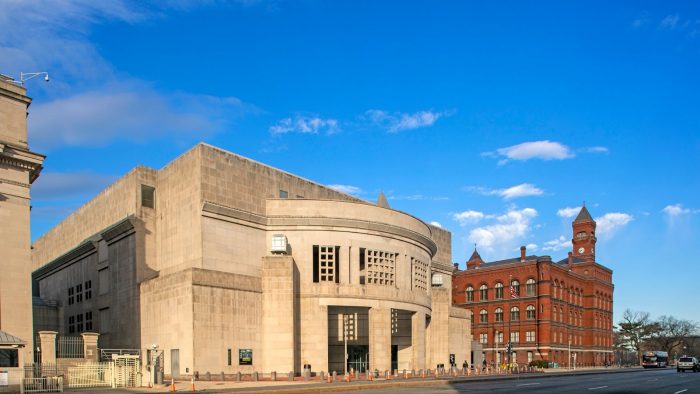
The USHMM was originally opened in 1993 at the National Mall. (Photo: Alain Jaramillo Architectural Photography)
“The Holocaust (1933–1945) was the systematic, state-sponsored persecution and murder of six million European Jews by the Nazi German regime and its allies and collaborators.”
So opens the United States Holocaust Memorial Museum (USHMM) website’s introduction to the Holocaust. This catastrophe was rooted in long-standing antisemitism or hatred of Jewish people. But while it was not the first antisemitic atrocity (the Spanish Inquisition came several hundred years earlier), the Holocaust remains notable for the sheer scale of loss of life.
It is also very, very hard not to notice its reflection in the most recent form of American fascism. The knowledge of what came before is heavy (heavy enough that many people deny it happened), but it does allow us to recognize what’s happening. And that knowledge is only possible because of efforts to preserve the history of the Holocaust from organizations like the USHMM.
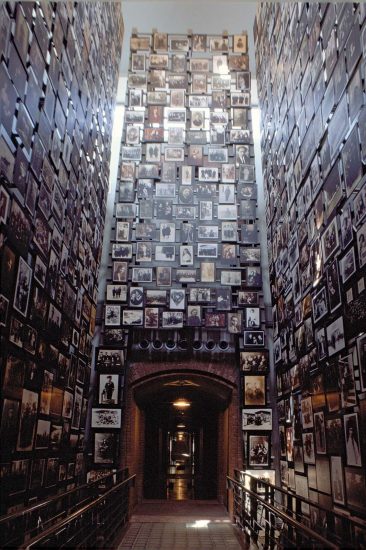
The Tower of Faces in the main Holocaust exhibit at the USHMM.
The USHMM is dedicated to preserving the memory of the Holocaust and its history. Per their mission statement, they aim to “confront antisemitism and hatred, prevent genocide, and promote human dignity.” In addition to history about the Holocaust and its survivors, the USHMM also offers information about Holocaust denial, antisemitism, and mass atrocities more broadly.
Located in Washington, D.C., this museum was chartered by a unanimous Act of Congress in 1980 and guaranteed a permanent place on the National Mall opposite the U.S. Capitol building and the White House. Since its completion and dedication in 1993, this nonpartisan educational institution has received over 50 million visitors from around the country and the world, 11 million of whom were school-aged children.
The USHMM houses multiple on-site exhibits for visitors, including the permanent exhibition about the Holocaust and a rotation of two to three accompanying exhibits. Currently on display are the “Remember the Children: Daniel’s Story,” which presents the history of the Holocaust through one child’s experience, and “One Thousand and Seventy-eight Blue Skies,” which displays images of the sky over ever known Nazi concentration camp and killing center in Europe. It also hosts traveling exhibits, which have appeared in 195 cities in the United States, as well as Canada, Germany, Hungary, Israel, Croatia, and Serbia. For remote visitors, the USHMM offers online exhibitions, both new and archived from previous on-site exhibits.
In addition to these many exhibits, the USHMM also provides numerous resources for educators teaching about the Holocaust and for researchers, whether academic or personal. Online collections include more than 270,000 records of photo albums, interviews, memoirs, diaries, home movies, and films from before, during, and after the Holocaust. Users can filter these records for digital availability, date created, holding institutions, personal stories, types of material, and topics (including events, cities, camps, and ghettos). For educators, there are teaching resources, podcasts, professional development opportunities, as well as poster sets and videos for classroom use. For researchers, there are FAQs, a form for submitting a research question to the museum, and information about citing museum materials and rights. Users can also access the USHMM’s other online resources, such as the Holocaust Encyclopedia, the Holocaust Survivors and Victims Resource Center, and the Encyclopedia of Camps and Ghettos. There is even a page with advice on how to plan a research visit.

A somewhat ambiguous message about the USHMM’s continued accessibility. Screenshot taken October 29, 2025.
Unfortunately, because it is such an incredible resource dedicated to spreading Holocaust awareness, the USHMM is often a target of antisemitic violence. The Plan Your Visit page opens with a promise to keep visitors safe and information about how they do so. Furthermore, as an institution that receives federal funding, the museum is also subject to political input. With an administration that boasts about cutting “unnecessary” programs, especially those related to “diversity,” the museum’s fate is likely more tenuous than it ever has been.
It’s unknown what might happen to the USHMM’s incredible resources if the museum is closed. But they are incredibly important – and they need to be protected and preserved for as long as possible. If you would like to visit its collections in person or online, take advantage while you can and support the museum!
0 Comments