Written by Sophia Catalano, ALASC Blogging Coordinator
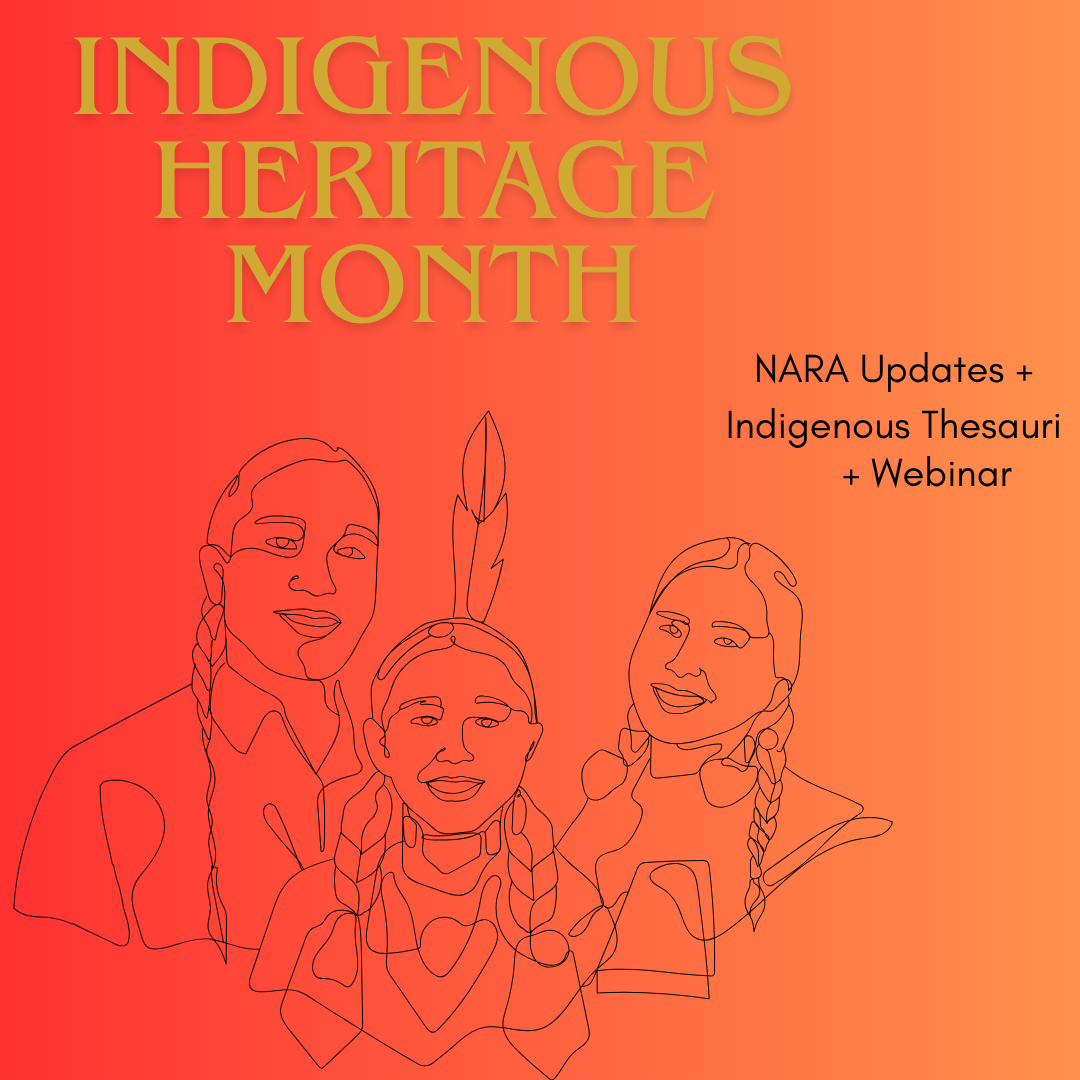
With November being Indigenous Heritage Month, there are a couple of topics I would like to touch on in regards to the indigenous peoples of the world and the relationship between them and libraries and archives.
As you might have heard, the National Archives and Records Administration are closing their locations in Chicago and San Francisco/San Bruno, and have plans to begin moving records out of their Seattle location (Friedman, 2026). This is a huge blow not only to the NARA employees who will inevitably lose their jobs, but also to the communities that these facilities serve. The Chicago NARA location in particular holds the Bureau of Indian Affairs records for tribes across the states of Illinois, Minnesota, Wisconsin, Michigan, Indiana, and Ohio. These records hold family histories, artifacts, and more. According to the August 2026 update on the National Archives and Records Administration website, the records for the Bureau of Indian Affairs kept at Chicago will be relocated to the National Archives at Kansas City, over 400 miles from their original location (U.S. National Archives and Records Administration, 2026). This will not only put these records further out of reach for the communities that need them, but will also separate those who hold deep knowledge of these records, the archivists who have worked personally with these records, with the information that they have worked closely with and cultivated. This is an issue for many reasons, one of those being that archivists who have worked with specific records for a long time usually have information about and familiarity with the records that those new to the records won’t have, which makes it easier for those looking to access the records might need.
Theformidablegenealogist on Instagram sums up exactly why this is important in this reel here:
https://www.instagram.com/p/DbeLkgovCsj/
I would highly encourage you to give it a watch, as she sums up the reason why it is important to keep these records in Chicago much better than I ever could, although I have tried here.
What can you do about this? Well, there are actually quite a few steps we can take to try and prevent these vital facilities from closing and cutting off access to these records. As laid out by the National Council on Public History, you can:
- Support locally-led efforts in Chicago and San Francisco
- Contact NARA leadership to share why closing these facilities would be a mistake (more information linked in the NCPH flyer below)
- Reach out to your Representatives and Senators to ask them to support the effort of Reps. Mullins and Garcia in opposing the closures
- Sign the Change.org petitions listed in the flyer linked below
https://ncph.org/wp-content/uploads/2026/10/10.5.2026-NCPH-Call-to-Action-NARA-Closures.pdf
(National Council for Public Advocacy, n.d.)
On a brighter note, our blogging assistant Alondra shared with me an article she read in one of her classes about indigenous librarianship. Titled “Indigenous Knowledge in a Post-Apology Era: Steps Towards Healing and Bridge Building” and written by Jamila Ghaddar and Nadia Caidi, it is available in the King Library for San José students.
In this article, the authors discuss the origins of indigenous librarianship and point out the shortfalls of the eurocentric system our libraries were built on (and this includes the Dewey Decimal System) for indigenous peoples and their communities. Page 43 really hits home why the current system just isn’t built for indigenous people, and is a sobering reminder of what we still have to work on. However, page 44 lights a spark of hope that things will and are getting better. Projects from Aotearoa/New Zealand to Australia to Canada are building indigenous thesauri with the extensive consultation of their respective indigenous peoples to be used in libraries. I feel this quote from the authors sums up nicely why these initiatives are important, and why it is so very important to develop them alongside indigenous groups:
“These three local thesauri initiatives reflect the increasing consensus that cataloging-practice for indigenous topics must recognize the names, relationships, places, histories, frameworks and concepts used by indigenous peoples. They also reflect the view that a tool to meet the needs of any specific indigenous group or nation cannot be developed by inserting or incorporating elements of any group’s worldview into a system which approaches knowledge organization in fundamentally different ways. Rather, culturally based approaches along with culturally specific terminology are required.” (Ghaddar & Caidi, 2014, p. 44).
And don’t forget to join the ALASC and IDEA/Student Success Committee webinar on December 3rd at 5:30 PST: Experiences in Indigenous Librarianship- A conversation with Keau George, Native Hawaiian information professional, and 2026 iSchool graduate. We’ll talk about community relationships and politics; issues of access and managing crises; controlled vocabulary; and we will draw similarities with experiences of public librarians in war-torn Ukraine. Please use the link down below to register for the webinar:
https://sjsu.zoom.us/meeting/register/VJJaXgndSnGPpERAc01vMg
References
Friedman, D. (2026, June 25). National Archives to transition out of three federal records centers. Federal News Network. https://federalnewsnetwork.com/facilities-construction/2026/06/national-archives-to-transition-out-of-three-federal-records-centers/
Ghaddar, J., & Caidi, N. (2014). Indigenous Knowledge in a Post-Apology Era: Steps Toward Healing and Bridge Building. Bulletin of the American Society for Information Science and Technology (Online), 40(5), 41–45. https://search.proquest.com.libaccess.sjlibrary.org/trade-journals/indigenous-knowledge-post-apology-era-steps/docview/1538576779/se-2
National Council for Public Advocacy. (n.d.) Advocacy alert!. https://ncph.org/wp-content/uploads/2026/10/10.5.2026-NCPH-Call-to-Action-NARA-Closures.pdf
The Formidable Genealogist [@theformidablegenealogist]. (2026, July 31). 31 July 2026 visit saveournationalarchives.org for petitions and updates #Genealogy #NARA #NationalArchives [Video]. Instagram. https://www.instagram.com/p/DbeLkgovCsj/
U.S. National Archives and Records Administration. (2026, November 18). Researcher Updates. National Archives. https://www.archives.gov/research/news