Expect the Unexpected: Items Uncovered when Processing Backlog Collections
Welcome back to the 2026-2027 school year! To start the year, let’s talk about the archival backlog.
What is a backlog?
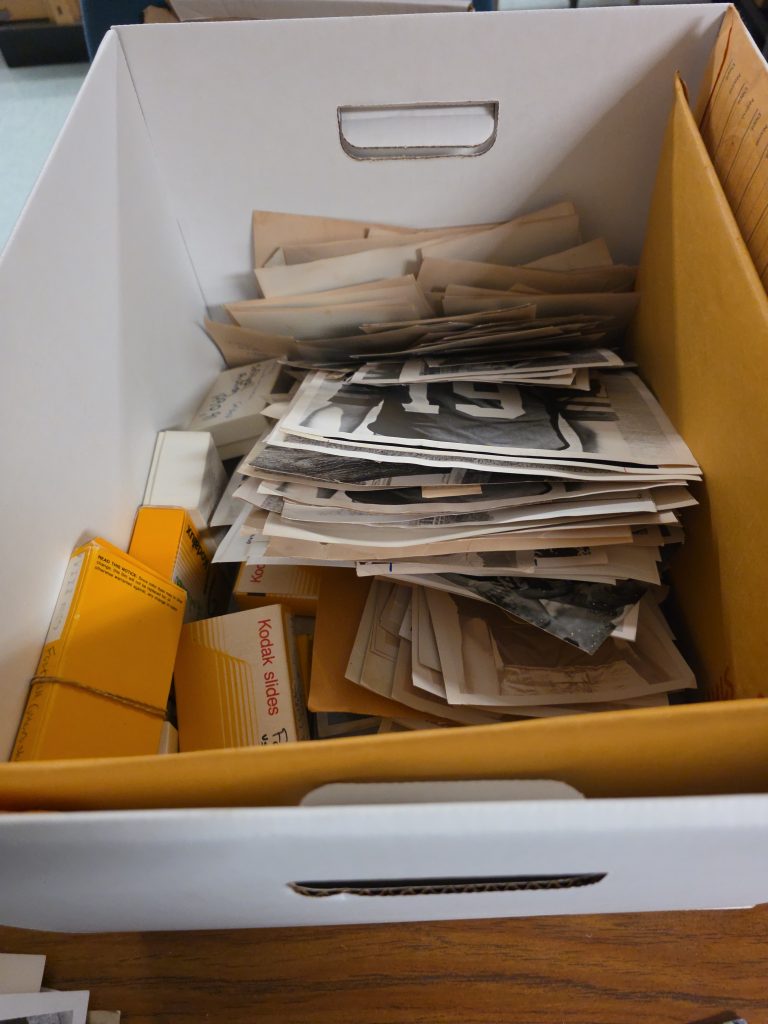
In archives, there is often a long list of “backlog collections.” The backlog refers to collections that were received by a repository but have not undergone one or more archival processes. (Society of American Archivists, n.d.) Often, the materials are placed in boxes provided by the donor and are not in acid-free enclosures. Some materials may also be unorganized and piled together haphazardly. So, it is a processing archivist’s and the processing staff’s job to keep a handle on their backlog; this includes knowing how big the backlog is and working to bring order to the chaos in one way or another. There are many reasons why the archival backlog continues to grow, but one of the most prominent issues is that collections are acquired faster than we can process them. Staffing and resource shortages also exacerbate the issue.
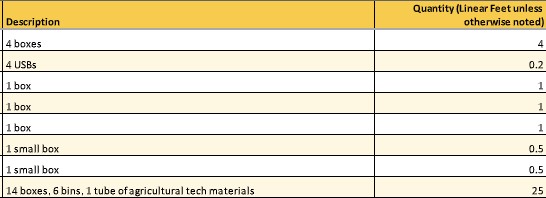
One of my first tasks as a processing paraprofessional was creating a detailed location spreadsheet for our backlog collections. Before that, we organized our backlog through a mix of institutional knowledge, a spreadsheet with arbitrary locations, and dedicated scavenger hunts. My colleague and I spent hours adding labels to shelves in our many interim storage locations, and I spent equal time confirming the collections (and the linear feet they comprised) and entering them into the new spreadsheet. With that, we gained control of the space and the size of our backlog so we could start working on reducing it.
First-hand Experiences
One thing to keep in mind is that you can be surprised by what you find in backlog collections. For example, one collection I worked on that came in around 2020 contained a box of passports, which, while interesting to see, are not technically part of a university’s collecting scope. Not to mention, they are considered personally identifiable information (PII), so they have to be redacted, restricted, or deaccessioned anyway.

Another more bizarre finding was a set of silverware from a historic location in California that was “gathered by rats.” Yes, that is the correct sentence. This donor was meticulous in their documentation and provided an inventory of the materials. At first, I was not sure what to make of the entry: “Cup of [redacted] -1847 Silverware collected by rats in the barn (who like shiny things).” I had to confirm what I read, so I checked the box, and sure enough, a cup of bubble-wrapped silverware stared back at me.
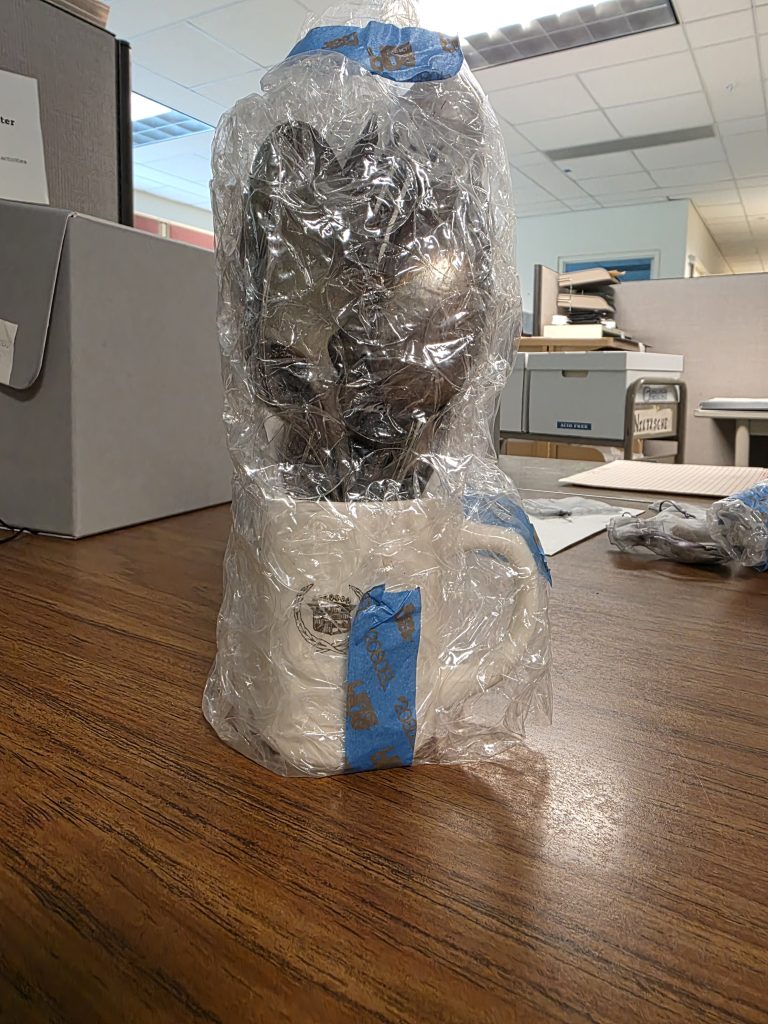
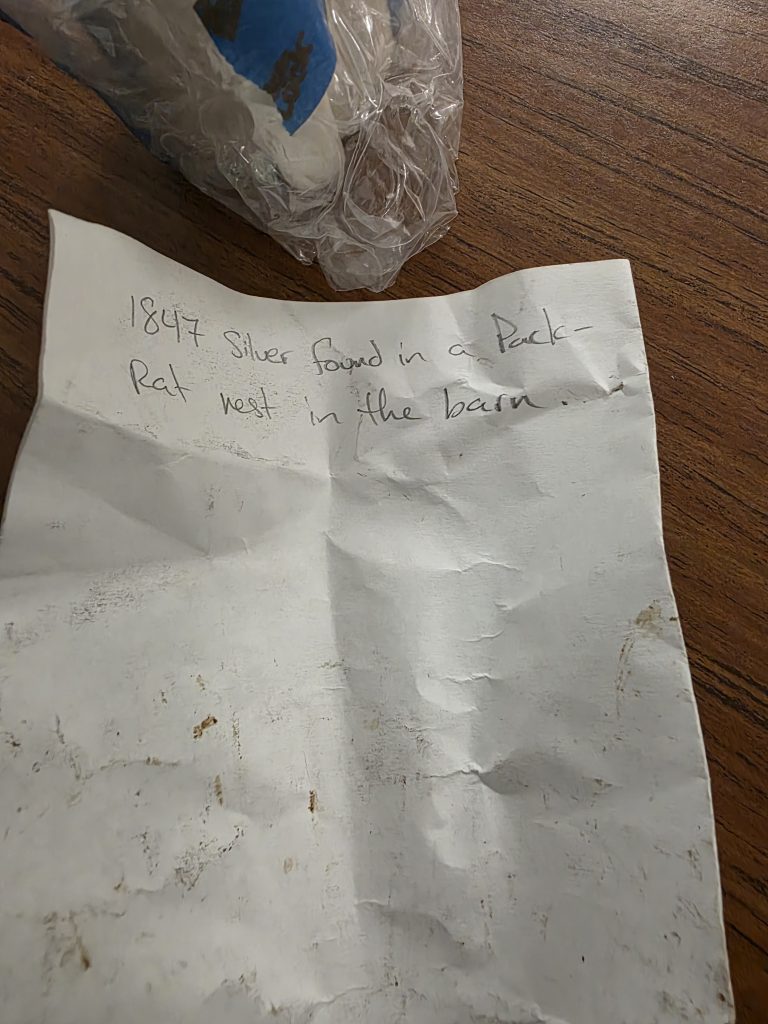
I quickly grabbed a pair of gloves and pulled out the note inside the bubble wrap, which reiterated that the silverware had been found in a barn in a rat’s nest. Since this was already accessioned, I spoke with the curators and the head of my department to ensure I could deaccession them. Luckily, the answer was yes, so I photographed the artifacts and deaccessioned them. More importantly, I avoided any 1847-2025 illnesses.
These examples aren’t typical of backlog collections. Sometimes you get the regular unorganized boxes or if you’re lucky, you get meticulously organized records. But if you ever get the chance to process archival collections, brace yourself for something unexpected.
Reference:
Society of American Archivists. (n.d.). SAA Dictionary. https://dictionary.archivists.org/index.html