Happy October! Among many other celebrations, October is American Archives Month. In October, archivists in the United States engage in month-long outreach and educational activities to promote archival work and archival resources. In California, there are two events where the public can learn more about archives in person: the Archives Bazaar in Los Angeles and the Archives Crawl in Sacramento. Make sure to be on the lookout for your local area’s Archives Month activities or mark your calendars for next year’s Bazaar or Crawl.
Archives in Context: A Review
In the spirit of promoting archives, archivists, and what they do, today I will be reviewing an episode of Archives in Context. Archives in Context is a podcast by the Society of American Archivists that has in-depth conversations about archives and the people behind them. In the latest episode (Season 9, Episode 6), the co-hosts talk with Rachel Antell and Stephanie Jenkins, co-founders of the Archival Producers Alliance (APA). According to the podcast, archival producers work with filmmakers to research and identify archival materials for inclusion in documentaries, feature films, exhibits, and many additional projects (Archives in Context, 2026). This episode defines archival producers, explains what they do, provides an example of day-to-day activities, and offers insight into the issues that shape their work.
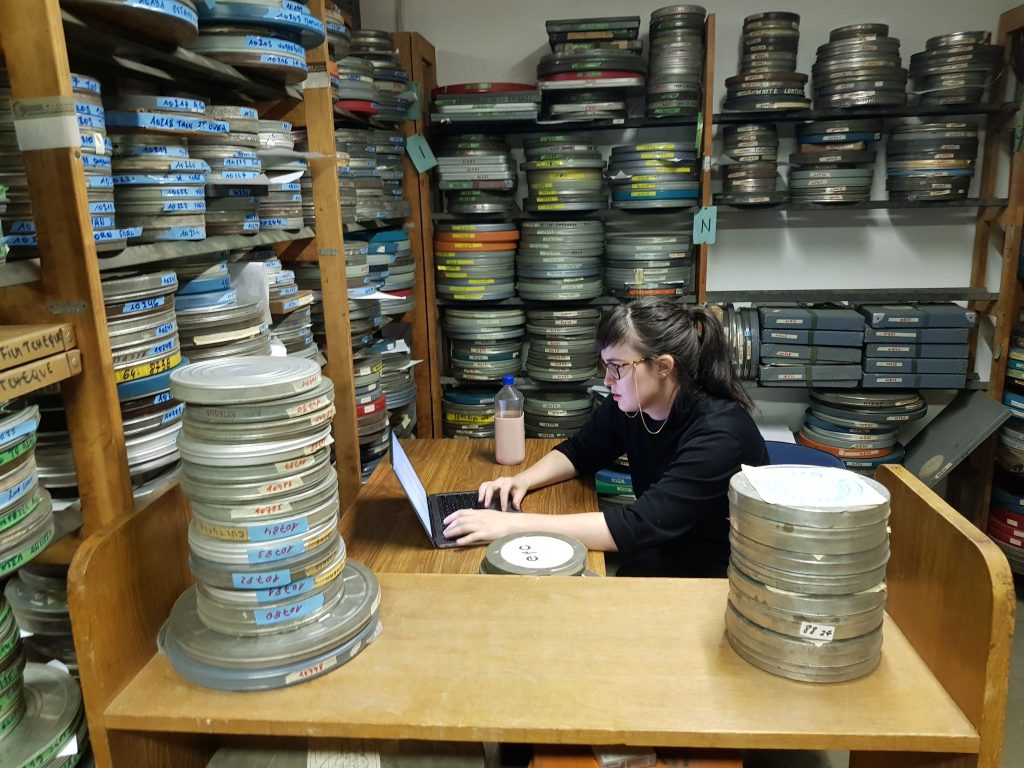
One of the biggest takeaways of this episode is the career pathway of an archival producer. The episode helps beginning and experienced archivists learn about a path open to those interested in filmmaking or content creation. Antell and Jenkins describe how archival producers are integral to filmmakers’ work in acquiring primary sources for their films. Primary sources can include research needed for production or materials like photographs, videos, etc. Both archivists started this career pathway through their shared experience in the Association for Moving Images professional network. From there, they cofounded the APA with another archivist, Jen Petrucelli, to “promote the value, use, protection, and preservation of authentic archival materials; and to elevate and amplify the role of archival producers within non-fiction media” (Archival Producers Alliance, n.d.).
One of the biggest challenges archival producers face is tracking and securing copyright clearance for the primary resources used in documentaries or films. Copyright is complicated in the United States, but if a film is meant for international audiences, archivists must also consider other copyright laws. That is where being an archivist comes into play, since archivists and archives constantly grapple with these issues. Who owns the right to a primary source, and can they give permission to use it in a publication (or in this case, a film)? Is it the institution? Is it the donor? Is it the creator? Are these all the same? An archival producer will find the answers to these questions by staying in constant contact with the archive, lawyers, and other relevant parties.
The most interesting part of this episode is how generative AI is affecting work in filmmaking. The APA created guidelines for using generative AI in documentary filmmaking, and this episode discusses some of the challenges it poses for archival producers. For one, documentaries and archival producers rely on factual primary sources to produce films. What happens when generative AI is used to create the film? Antell and Jenkins note that, with archival producers’ work, you can trace sources and verify information if there’s an issue. Generative AI, however, pulls information from multiple sources, some of which may be non-existent. How does this affect the authority of a documentary? Can the film be trusted as a source? APA guidelines help documentary creators recognize the value of historical primary sources and the information they can gather from the original source. The APA guidelines caution filmmakers about reproductions using generative AI and suggest that the use of generative AI comes with the same cautions as re-enactments and recreations.
Overall, this episode provided a lot of food for thought. Archives in Context is a good podcast to listen to if you want to learn more about archives, archivists, and the potential career paths that can open up based on your experience and interests. For a list of more podcasts available about archives and archivists, please visit Publishing in the Archives Profession.