Greetings SAASC Blog readers!
Let me introduce myself: My name is Vanessa, and I currently work as a processing assistant in an academic library. I am introducing a segment into the blog rotation where I (and other members!) can share some on-the-ground archival issues from time to time for those interested in the behind-the-scenes work that happens in archives. This segment will be titled From the Processing Table.
What Happens to Common Office Supplies?
In the average person’s day-to-day work or research, they most likely use common office supplies. Have you ever gathered your papers or photos together with a rubber band? Maybe you had to paperclip your papers together and left them as is somewhere in your home or office. We’ve all had to staple one thing or another together. For those extra bulky things, binder clips work wonders. Yet, what happens to these different materials and your documents over time?
Well, for one, metals corrode over time, so paperclips, staples, binder clips, and other metal fasteners will leave permanent marks on your documents. If those materials come into contact with moisture, the rust stains them and permanently marks them.
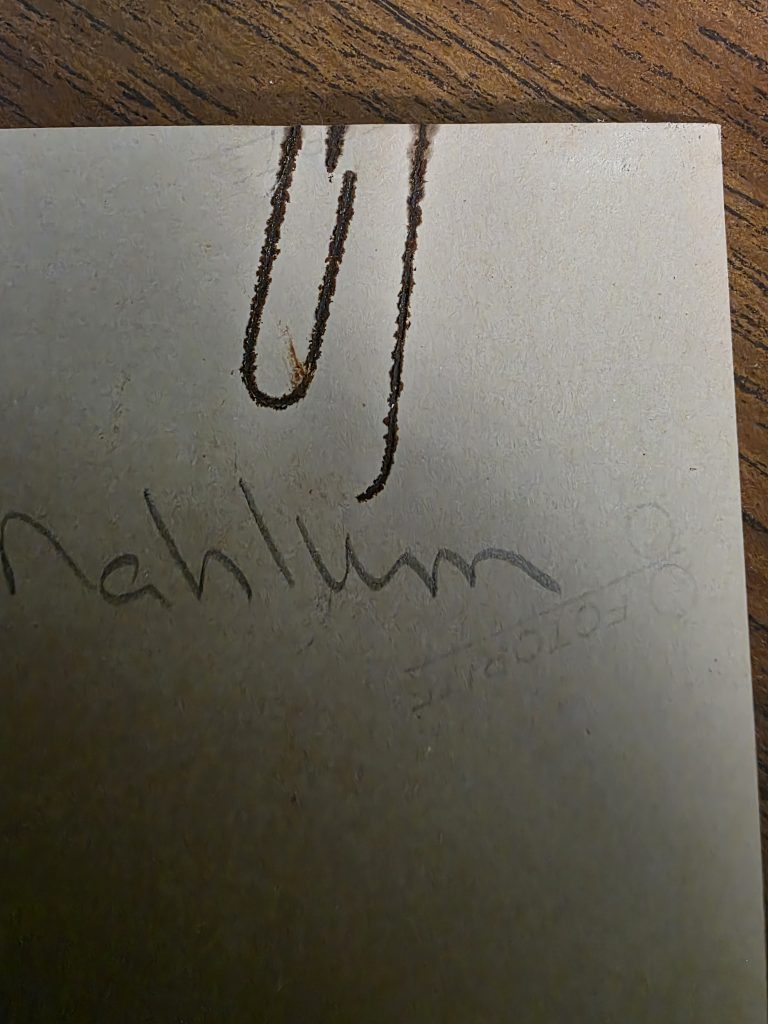
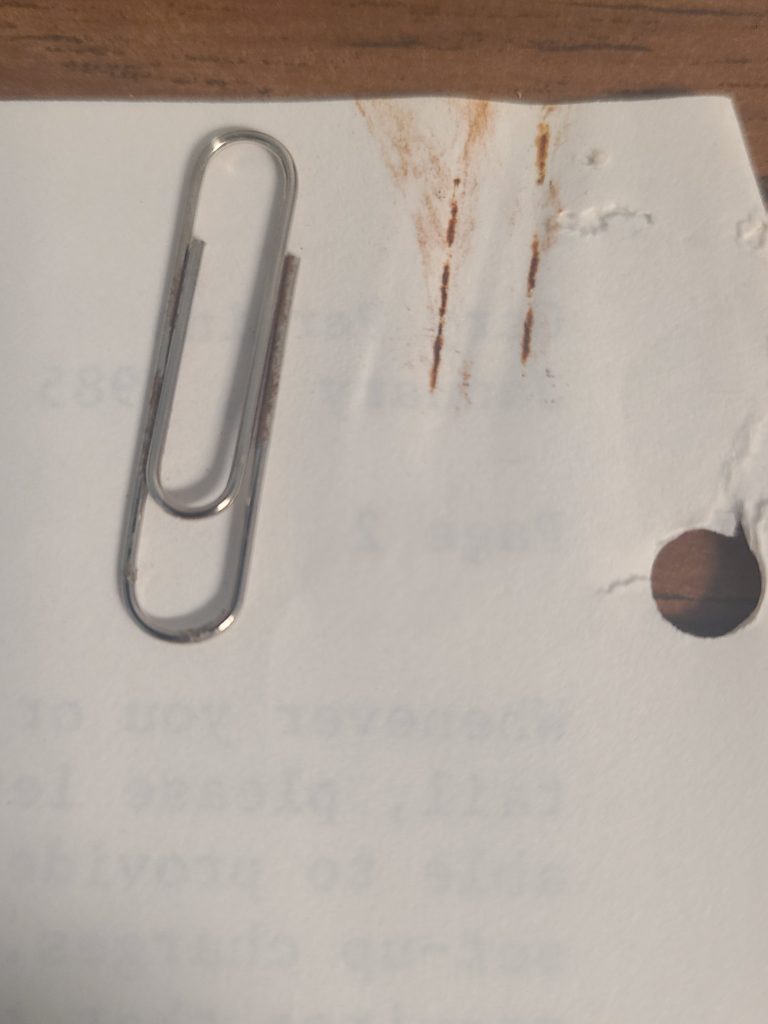
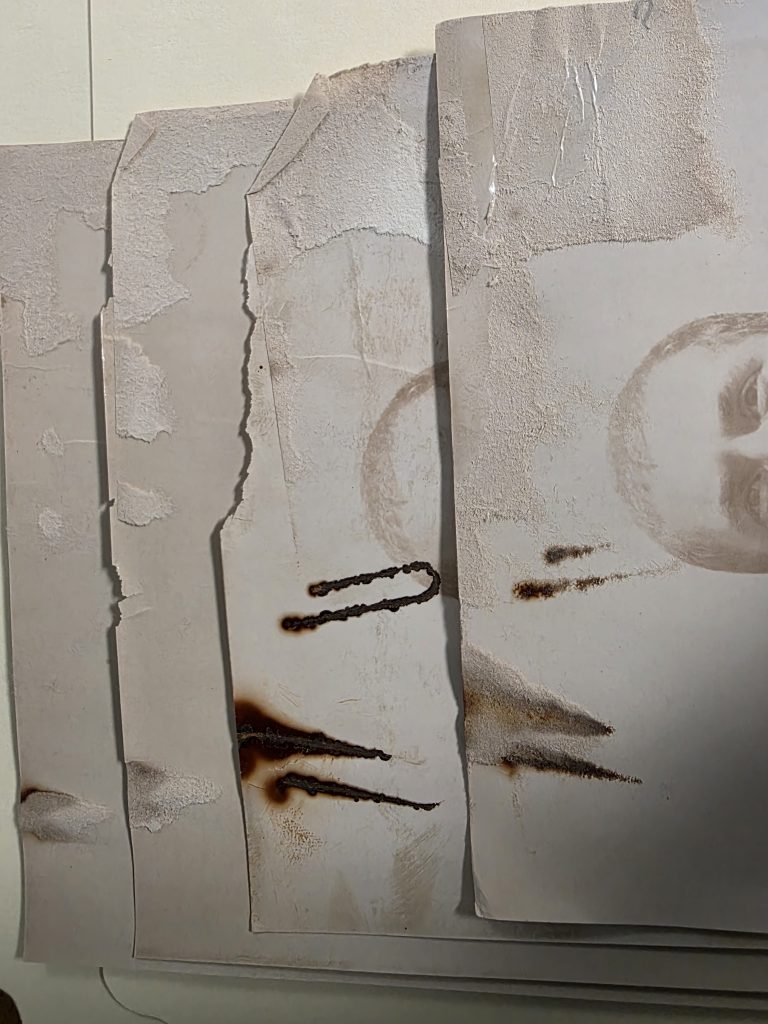
For this reason, the NEDCC recommends carefully removing metal fasteners from archival documents if possible (NEDCC, 2020). When in doubt, it is a best practice to leave the fasteners as they are and consult with someone trained in archival preservation.
Rubber bands are also another common office supply. For smaller documents, people find it easy to tie them together with a rubber band but over time, the material breaks down and becomes brittle.
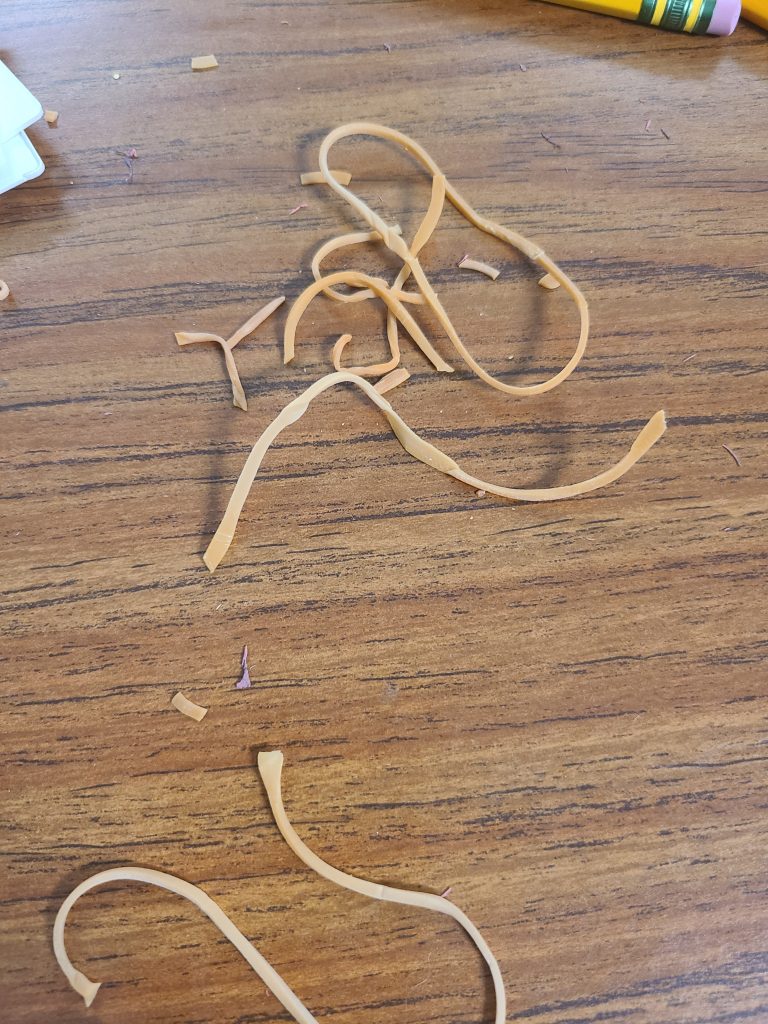
The brittle nature of the degraded fastener is a bit easier to handle when processing because it means it “breaks” off easier with a micro spatula without damaging the materials. However, the rubber band has different stages of degradation so it may also produce a sticky residue as it breaks down and that can cause more damage to the materials if the archivist is not careful. Similar to metal fasteners, if removing the fastener might cause damage or you are unsure, it is best to leave them in place until a person trained in preservation can handle it.
In the end, it is always best to leave the materials as they are if you are unsure if you will cause damage. In most cases, the materials are processed using the More Product, Less Process method, so taking time to remove fasteners is not recommended unless the fasteners are actively causing more damage to the papers or impeding access to the materials.
Are there alternatives ?
Are there ways to keep materials together without damaging them? Sure! Something my institution does when we have to group materials together is enclose them in a folded 11×17 archival bond paper. This creates a mini folder within a folder, helping keep the materials together without further damaging them.
In day-to-day life, you may not have access to archival bond paper, so Plastiklips (or plastic and coated paper clips you can find at any supply store/online) might be a good alternative for keeping your personal papers together.
References:
NEDCC. (2020). 7.8 Removal of Damaging Fasteners from Historic Documents. https://www.nedcc.org/free-resources/preservation-leaflets/7.-conservation-procedures/7.8-removal-of-damaging-fasteners-from-historic-documents