Written by Sarah Walters
Edited by Max Gonzalez Burdick & Sereen Suleiman
SLASC would like to honor and bring awareness to pioneering women who have made major impacts in special librarianship! These professionals have created classification schemes, directed libraries, expanded their library’s collections, led professional associations, and made history at the institutions in which they worked. Take a look at the following women who have made a mark in the world of special libraries.
Art Libraries
Judith Hoffberg (1934-2009) co-founded the Art Libraries Society of North America (ARLIS/NA) in 1972 and served as its first president in 1973. Hoffberg was the editor of the ARLIS/NA newsletter from 1972 to 1977 and the executive secretary from 1974 to 1977.
Government Libraries

Adelaide Hasse (1868-1953) created the SuDocs (Superintendent of Documents) classification scheme, which is used by the Government Publishing Office (GPO) and the Federal Depository Library Program (FDLP) for government materials. I first learned about Hasse this semester in INFO 221: Government Information Sources, where she is described as a “pioneering and strong-willed librarian who is a bit of a folk hero in government documents circles” (Hartnett, Sevetson, & Forte, 2016, p. 18). She became the first librarian at GPO in 1895 — and after two years, “she almost singlehandedly set up the documents library.” Hasse had a six-decade-long career in librarianship and was recognized by American Libraries Magazine in 1999 as one of the 100 most important leaders in librarianship in the 20th century.

Mary Florence Wilson (1884-1977) was the first librarian for the League of Nations. After eight years in the role, she increased the library’s collection from zero to 90,000 volumes. Wilson also worked as a liaison officer for the American Library Association (ALA) and the Library of Congress. According to an IFLA blog post from 2019, “she strongly promoted the library as an open space, giving visitors the opportunity to browse for themselves (a relatively revolutionary idea in research libraries in Europe at the time).”

Dr. Carla Hayden is the 14th Librarian of Congress. She was nominated by former President Barack Obama and confirmed by the Senate in 2016, becoming the first woman and the first African American Librarian of Congress. Dr. Hayden was previously the president of ALA in 2003 and 2004. During my internships with the Law Library of Congress, interns were invited to a Zoom meeting with library leadership, including with Dr. Hayden. Some of her advice for aspiring librarians is to be ready to relocate and continue to grow. She said that the most valuable traits of a library leader are empathy and trusting the people you work with. At the Library of Congress, Dr. Hayden said she has made sure that people have more resources and are able to accomplish more.
Law Libraries
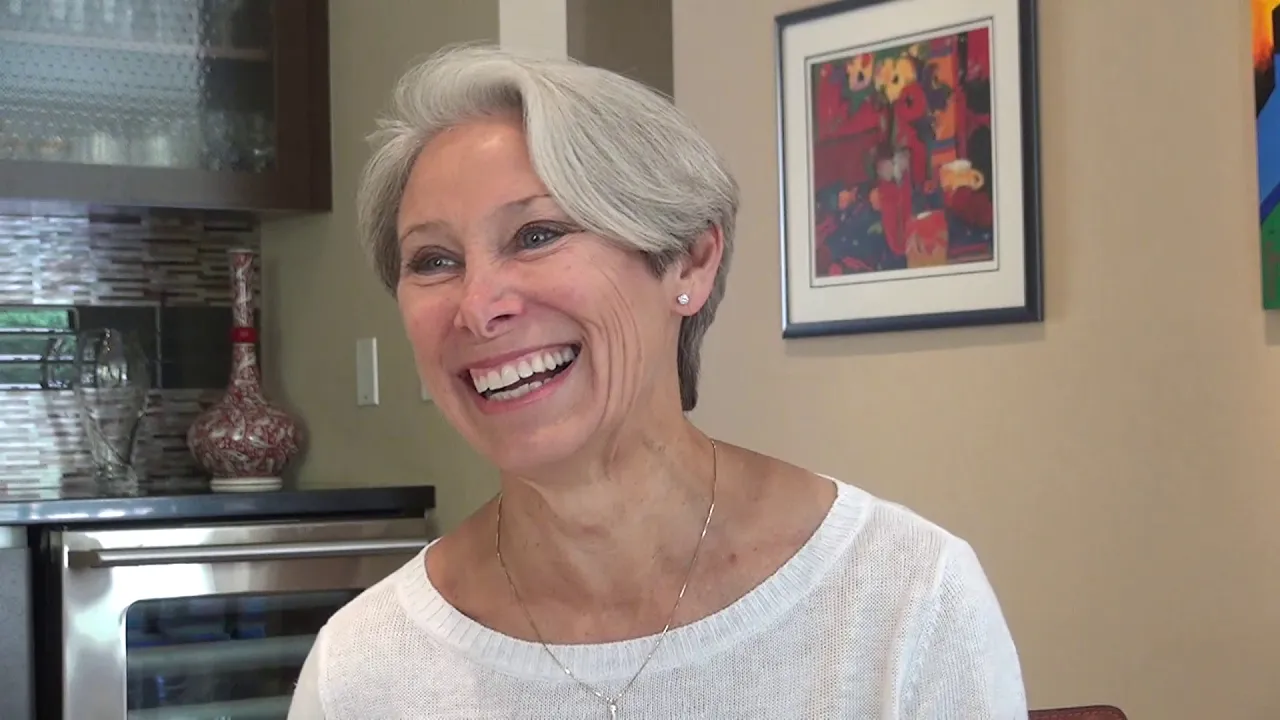
Marcia J. Koslov was the state law librarian for Wisconsin from 1974 to 1999, the first woman in that role and the second-longest-serving state law librarian in Wisconsin. The American Association of Law Libraries (AALL) has a scholarship named in her honor, which “supports AALL members who work in a government law library, by providing funding to attend continuing education programs.”

M. Kathleen Price was the first woman Law Librarian of Congress, and served from 1990-1994. She was previously president of AALL in 1983-1984 and was inducted into the AALL Hall of Fame in 2011.
Medical Libraries

Janet Doe (1895-1985) was the first woman library director at the New York Academy of Medicine, where she worked for three decades. Doe was previously the president of the Medical Library Association (MLA) and was the editor of the first two editions of the Medical Library Practice handbook. She was also a consultant for the Army Medical Library (a previous name for the National Library of Medicine, NLM). Doe was honored by MLA in 1966 with the creation of their most prestigious lecture, the Janet Doe Lectureship, for “unique perspectives on the history or philosophy of medical librarianship.”
Museum Libraries

Jane Wadden Turner (1818–1896) was the first woman to be employed at the Smithsonian Institution as a library clerk in 1857. Turner trained under her brother, William. Together, they created the first library catalog at the National Museum.

Following Turner, Leila Gay Forbes Clark (1887-1964) was the second woman to work at the Smithsonian Libraries. She was initially hired in 1929 as an assistant librarian in charge of reference services, and proceeded to spend the rest of her career from 1942 to 1957 as the director of the world’s largest museum library system.

Belle da Costa Greene (1879-1950) was the first librarian and director of the Morgan Library for a little over four decades. She was initially the private librarian for J. Pierpont Morgan and his son Jack. In her tenure at the Morgan Library, she built “one of the most important collections of rare books and manuscripts in the United States.” She is the subject of a new historical fiction novel, The Personal Librarian by Marie Benedict and Victoria Christopher Murray.
References
Hartnett, C. J., Sevetson, A., & Forte, E. J. (2016). Fundamentals of government information: Mining, finding, evaluating, and using government resources (2nd ed.). ALA Neal-Schuman.
Are there other historical and groundbreaking women in special librarianship we should have covered in this blog post? Let us know about them in the comments below!
1 Comment
Havilah Steinman · 21 Oct 2021 at 7:12 AM
Love love love this! Just finished the personal librarian and it was AWESOME!